menu
Home automation has transformed from a luxury feature to an essential component of modern UK new builds. Whether you're a property developer looking to differentiate your development, a self-builder planning your dream home, or an architect specifying technology for clients, understanding home automation is critical to creating properties that meet 2026 buyer expectations.
This comprehensive guide covers everything you need to know about home automation in the UK, from planning and installation to costs, ROI, and choosing the right system for your project.
In this guide:
- What home automation means in the UK context
- Professional vs consumer systems
- Cost breakdowns and ROI data
- Planning for new builds and self-builds
- UK building regulations and compliance
- Choosing between automation systems
- Installation and electrician requirements
What is Home Automation?
Home automation refers to the integration of multiple building systems—lighting, heating, cooling, security, access control, shading, and more—into a single, intelligent control platform. In the UK market, this typically takes one of two forms:
Professional Integrated Systems (like Baulogic, Control4, Crestron, Loxone):
- Hardwired infrastructure using standards like KNX
- Installed during construction by electricians
- Centralized control of all home functions
- Preconfigured and tested before installation
- Designed for new builds and premium developments
- Independent of internet/Wi-Fi for core functions
Consumer Smart Home Devices (like Nest, Hive, Ring, Philips Hue):
- Wireless connectivity via Wi-Fi or Zigbee
- Retrofitted into existing homes
- Individual device control
- Set up by homeowners
- Relies on cloud services and internet connection
- Lower upfront cost but limited integration
For UK property developers and self-builders, professional integrated systems deliver the reliability, scalability, and whole-home integration that modern buyers expect.
---
Why Home Automation Matters in UK New Builds
The UK property market has fundamentally shifted. Smart home features are no longer optional luxuries—they're expected standards, particularly in premium and mid-market new builds.
Market Data:
- 78% of UK homebuyers consider smart home features important in purchase decisions
- Properties with integrated automation sell 20% faster on average
- Smart homes command 3-5% price premiums in competitive markets
- 50.2% of UK households will have smart home features by 2027
For developers, this translates to faster sales velocity, higher sale prices, market differentiation, and reduced buyer objections.
For self-builders, automation means future-proofed investment, energy efficiency, enhanced comfort, and increased property value.
Learn more about our solution → here.
The Business Case: ROI and Sales Impact
For UK property developers, home automation isn't a cost—it's an investment with measurable returns.
Financial Returns:
- Investment: £8,000-£45,000 per unit (depending on specification)
- ROI: 150-200% through accelerated sales and price premium
- Sales Velocity: 20-35% faster than non-automated comparables
- Price Premium: 3-5% above asking price
Real Case Study: 45-Unit Mixed Development
A mid-sized UK developer invested £625,000 (£14,000/unit) in comprehensive automation across a 45-unit suburban development.
Results:
- 89% sold in 6 months (vs typical 12-15 months)
- 4.2% average price premium achieved
- 92% first-year ROI (exceeding 60% target)
- £180,000 financing cost savings from accelerated sales
---
What UK Buyers Actually Want
Top 5 Features UK Buyers Value:
1. Climate Control (81% cite as important)
Individual room temperature control, app-based management, energy monitoring
2. Integrated Security (73%)
Cameras with mobile monitoring, smart access control, alarm integration
3. Lighting Automation (67%)
Scene setting, automated schedules, motion-activated lighting
4. Voice Control Integration (62%)
Alexa, Google Assistant, Siri compatibility
5. Energy Management (58%)
Real-time consumption monitoring, solar/battery integration
Learn more for developers → here.
.png)
The biggest mistake UK self-builders make is treating automation as an afterthought. Successful integration requires planning during the design phase.
Planning Automation from Day One
Pre-Construction Checklist:
Architectural Considerations:
- Central equipment location (utility room with climate control)
- Switch/panel locations (accessible, logical, aesthetically pleasing)
- Cable routes (minimize visible conduits)
- Network infrastructure (Wi-Fi coverage, wired backbone)
Electrical Design:
- Neutral wires at all switch locations (essential for smart switches)
- Dedicated circuits for automation equipment
- Surge protection for sensitive electronics
- Adequate power distribution to support all zones
Budget Allocation:
- Entry-level: £8,000-£15,000 (basic lighting, heating, security)
- Mid-range: £25,000-£45,000 (whole-home integration, advanced features)
- Premium: £75,000+ (luxury specification, high-end interfaces)
---
UK Building Regulations for Self-Build Automation
Part P Electrical Safety:
- All mains-powered automation requires certified electrician sign-off
- Electricians must be registered with NICEIC, ELECSA, or equivalent
Energy Performance (Part L & SAP):
- Smart heating controls can improve SAP calculations
- Zone control and weather compensation recognized
Documentation Requirements:
- Cable schedules and termination records
- Device locations and configurations
- Compliance certificates from installers
Complete building regulations compliance checklist → here.
Learn more for self-builders → here.
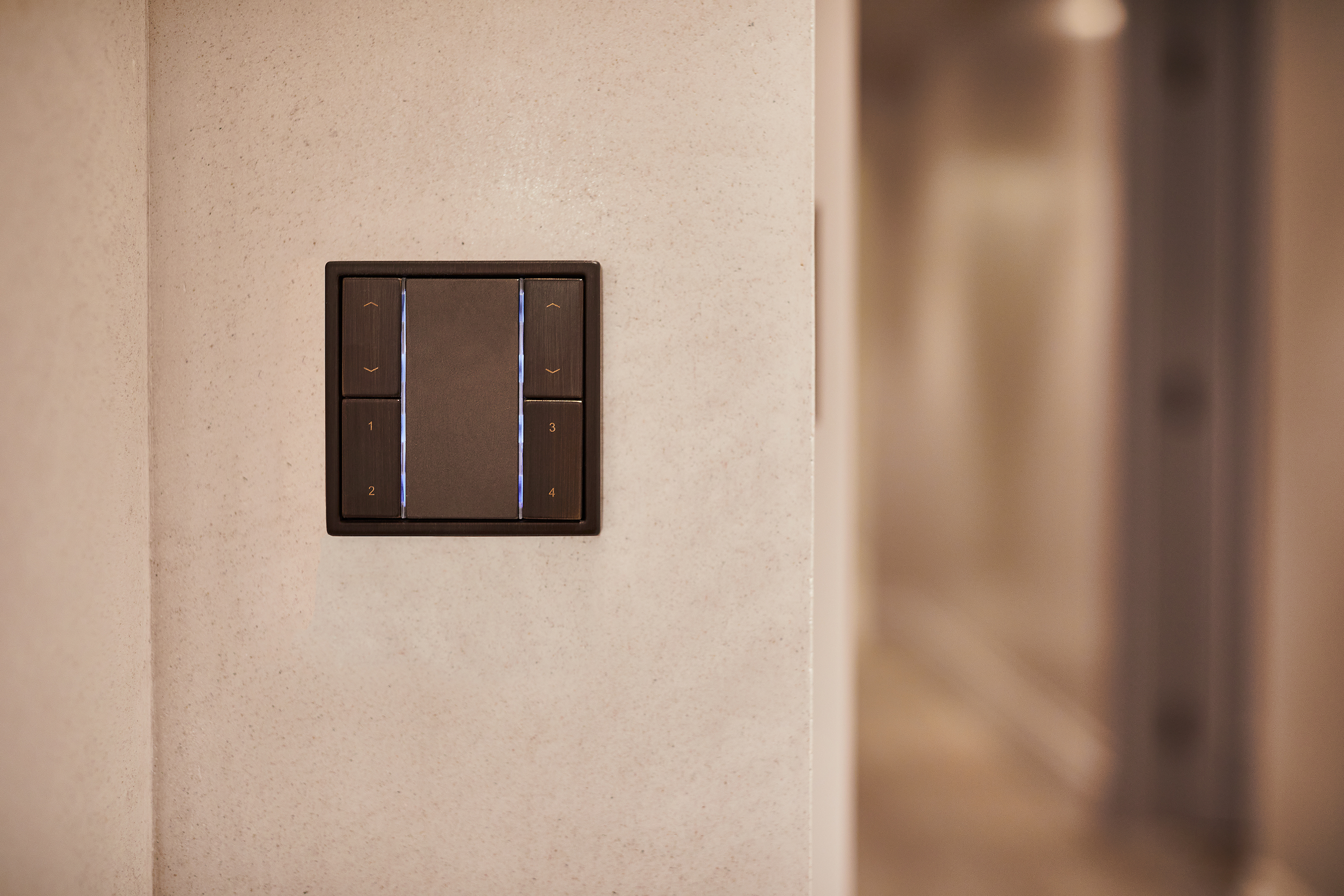
Technology Fundamentals: KNX vs Wi-Fi
KNX Protocol (Professional Standard):
- International standard (ISO/IEC 14543)
- Hardwired bus system (twisted pair cabling)
- No reliance on internet or Wi-Fi
- Used in major UK projects (Heathrow Terminal 5, luxury developments)
- Proven 30+ year track record
Wi-Fi/Cloud Systems (Consumer Standard):
- Wireless connectivity via home network
- Requires constant internet connection
- Typical 3-5 year product lifecycles
For UK new builds where reliability matters, KNX-based systems like Baulogic deliver superior performance.
---
Integration with UK Heating Systems
UK homes predominantly use wet central heating (radiators) with combi or system boilers. Automation must integrate seamlessly.
Compatible UK Heating Systems:
- Combi boilers (Worcester Bosch, Vaillant, Baxi)
- System boilers with hot water cylinders
- Heat pumps (air source, ground source)
- Underfloor heating systems
What Automation Provides:
- Individual room temperature control
- Zone-based scheduling
- Weather compensation
- Load compensation
- Energy monitoring
Energy Savings:
- 15-30% reduction in heating costs typical
- Individual room control eliminates heating unused spaces
---
Voice Control and AI Integration
Supported Voice Platforms:
- Amazon Alexa (most popular in UK)
Common Voice Commands:
- "Alexa, set living room to 21 degrees"
- "Hey Alexa, turn on movie mode"
- "Alexa, I'm leaving" (triggers away scene)
Comparing Leading UK Systems
Baulogic:
- Best for: UK developers, self-builders, electrician-friendly installation
- Technology: KNX-based, preconfigured off-site
- Installation: Any qualified UK electrician
- Pricing: £8,000-£35,000+
- Support: UK-based direct from manufacturer
- Ideal Projects: New builds, developments, premium self-builds
Control4:
- Best for: Luxury homes, high-end installations
- Technology: Proprietary protocol, custom programming
- Installation: Certified Control4 dealers only
- Pricing: £15,000-£100,000+
- Ideal Projects: Ultra-premium properties
Loxone:
- Best for: Tech-savvy self-builders, energy-focused projects
- Pricing: £10,000-£50,000+
- Ideal Projects: Eco-builds, self-builders with technical capability
Crestron:
- Best for: Ultra-luxury estates, commercial-grade systems
- Pricing: £50,000-£500,000+
- Ideal Projects: £5M+ properties, multi-property estates
Detailed comparison: Baulogic vs Control4 → here.
---
Questions to Ask Any Automation Provider
Installation:
1. Who can install this system? (Any electrician vs certified dealers)
2. What's the typical installation timeline?
3. Is configuration done on-site or off-site?
Costs:
4. What's included in the quoted price?
5. Are there ongoing subscription fees?
6. What are the support/maintenance costs?
Technology:
7. Does the system work without internet connectivity?
8. What happens during power outages?
9. How are firmware updates handled?
Support:
10. Where is support based? (UK vs international)
11. What are the support hours?
12. Is there an emergency support line?

2026 Trends Shaping UK Home Automation
Matter Protocol Adoption:
The Matter standard is revolutionizing device interoperability. UK systems increasingly support Matter, allowing devices from different manufacturers to work together seamlessly.
AI-Powered Automation:
Machine learning enables predictive automation. Systems learn routines and optimize settings automatically.
Energy Crisis Response:
Rising UK energy costs drive demand for consumption monitoring and automated optimization.
Voice Control Maturity:
Voice assistants evolve from simple commands to contextual understanding.
Sustainability Focus:
EPC ratings and green credentials influence buyer decisions. Automation contributes to energy efficiency.
---
Market Growth Projections
UK Smart Home Market:
- 2026 Revenue: £11.94 billion
- 2028 Projection: £13.2 billion
- Annual Growth: 11.66%
- Household Penetration: 50.2% by 2027
Future Outlook:
Home automation will become as standard as central heating in UK new builds. Properties without integrated systems will be viewed as outdated and worth less.
.png)
Home automation in the UK has matured from experimental luxury to mainstream necessity. Whether you're a developer seeking competitive advantage, a self-builder future-proofing your investment, or an architect specifying for clients, understanding the landscape is essential.
Key Takeaways:
✓ Professional integrated systems deliver better results than consumer gadgets
✓ UK building regulations require proper planning and certified installation
✓ ROI is proven: faster sales, price premiums, market differentiation
✓ Electrician-friendly systems offer flexibility and cost control
✓ KNX-based automation provides reliability and longevity
---
Next Steps:
For Developers:
Calculate automation costs for your project → Cost Calculator
Review real UK development case studies → Case Studies
Speak with our UK-based team → Contact
For Self-Builders:
Explore our self-build solutions → Self-Build
Calculate your project costs → Cost Calculator
Get expert guidance → Contact